
BASIS
Basis: LILYGO's published specs and documentation, plus the Meshtastic project's device notes. Not stocked here, not bench-tested here. Nothing below is a hands-on claim; where a number can vary by variant, it says so.
Radio Shack used to sell a particular promise: a box on the shelf that let two people talk without asking a network for permission. The T-Deck Plus is that promise rebuilt out of mesh parts. It is a handheld communicator from LILYGO with a real keyboard, a trackball, a color screen, a LoRa radio, and GPS, and it runs Meshtastic or MeshCore firmware, so it sends text to other mesh nodes with no cell service, no account, and no subscription anywhere in the loop.
01 · THE HARDWARE, HONESTLY
| CHIP | ESP32-S3FN16R8, 16 MB flash, 8 MB PSRAM, Wi-Fi and Bluetooth 5 LE |
| RADIO | Semtech SX1262 LoRa, up to +22 dBm; 433, 868, or 915 MHz by variant |
| SCREEN | 2.8 in IPS LCD, 320 x 240, touchscreen |
| INPUT | Backlit QWERTY keyboard and trackball |
| POSITION | Onboard GPS (u-blox or L76K module by variant) |
| POWER | 2000 mAh battery built in, USB-C charging |
| EXTRAS | microSD slot, microphone, speaker |
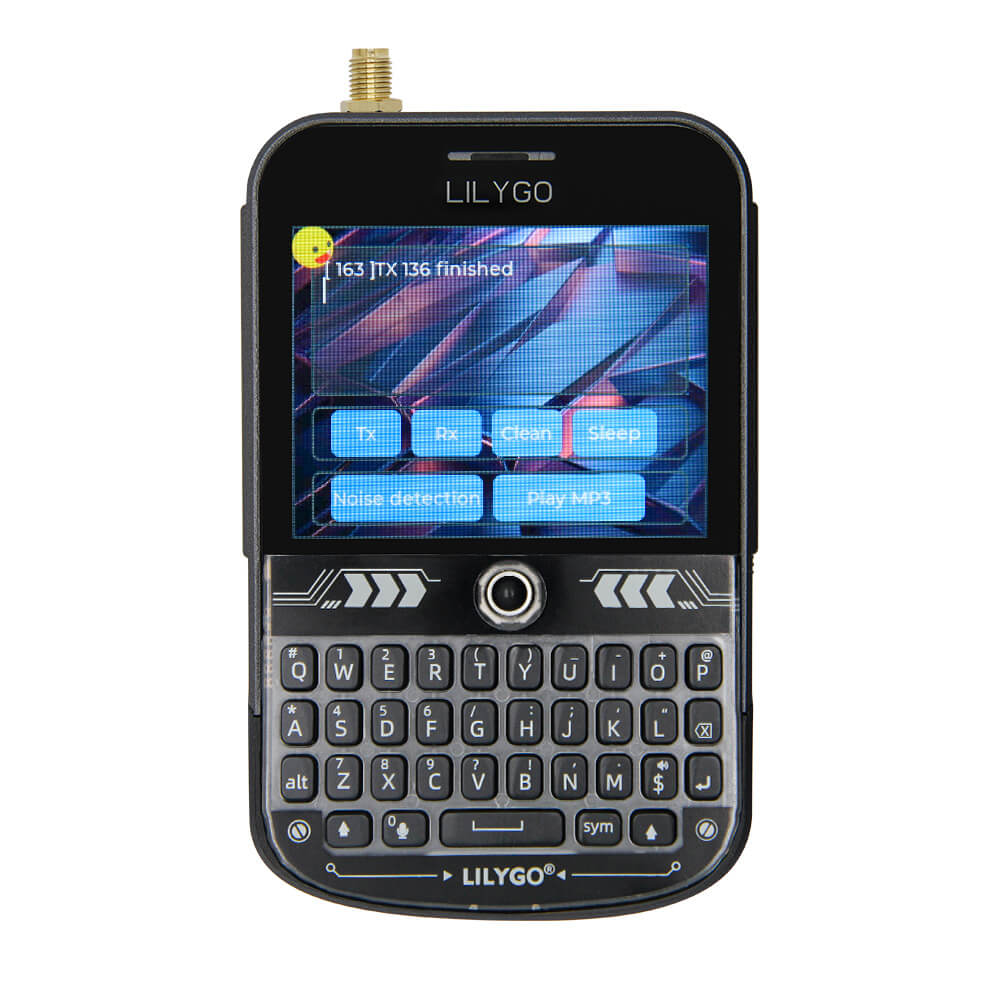
The Plus is the finished version of the original T-Deck idea. The first T-Deck made GPS and a battery your problem; the Plus builds both in and ships in a case. What did not change is the chip class. An ESP32-S3 is a microcontroller, not a small Linux computer, and the device is honest about that: it does one job, messaging over the mesh, and the interface is built around that job alone.
02 · THE KEYBOARD IS THE PRODUCT
Most Meshtastic nodes are radios with a settings screen. To send a message you pair a phone, open an app, and type on glass, which means the off-grid communicator depends on the most grid-dependent object you own. The T-Deck Plus cuts that dependency with fifty-odd physical keys and a trackball. You can read the node list, check your position on the GPS fix, and answer a message standing in a field with gloves half off, and the phone stays in your pocket with its battery unspent. That is the whole argument for the device, and it is a good one.
03 · WHAT A MESH ACTUALLY GIVES YOU
LoRa trades speed for reach. A mesh message is a short text, a position report, a telemetry ping, sent slowly over long distances on very little power, relayed node to node until it arrives. Line of sight is measured in kilometers, not meters, and a hilltop node can carry a valley. What it will never do is carry a photo, a voice call, or a web page, and anyone selling it as a phone replacement is selling. Judged as what it is, a text pager that a community builds for itself out of pocket-money radios, it is one of the few genuinely new consumer devices of the last few years: infrastructure you hold, owned by nobody, that works when the towers do not.
04 · THE LIMITS, PLAINLY
A mesh of one is a paperweight. The device is only as useful as the other nodes in range, so the first purchase question is not about the hardware at all; it is whether anyone near you runs a node, or whether you are willing to be the first and wait. The variants are a second trap: frequency band, antenna fitting, and GPS module all differ by listing, and a 868 MHz unit bought for the United States is the wrong radio no matter how good the price was. There is no waterproof rating. And the 2000 mAh battery feeds a color LCD and a Wi-Fi capable chip, so it is a day-scale device, not a week-scale one; the solar repeater on the fence post is a different node for a different job.
Buy the band your country uses, confirm the GPS module on the listing before paying, and put a fixed node somewhere high before you judge the range from your kitchen table.
WHERE TO GET ONE
The T-Deck Plus is sold by its maker, LILYGO, and by Meshtastic-focused resellers. This shop does not stock it. Check the frequency band and GPS module on the listing before ordering; both vary. The maker's own store lists it here, from $61.34 by variant as of this writing.